Phenibut and alcohol affect the brain in ways that can make their combined effects difficult to predict. Although some people use phenibut for relaxation or anxiety relief, adding alcohol can increase impairment and potentially cause serious harm. This guide breaks down how each substance affects the nervous system, the acute hazards of combining them, warning signs of an overdose, and what to do if someone has already taken both.
Table of Contents
What Is Phenibut?
Phenibut is a synthetic compound developed in the Soviet Union in the 1960s. It has been used medically in Russia and certain other countries for conditions involving anxiety, sleep disturbances, and some neurological or vestibular symptoms. Historical accounts also describe its use in the Soviet space program, although this does not establish that the substance was developed specifically for cosmonauts. Its medical use in some countries should not be confused with broad international regulatory approval or evidence that it is safe for unsupervised use.
In most Western countries, including the United States, the United Kingdom, Australia, and much of Europe, health regulators have not approved phenibut as a prescription medicine. Because it sits outside standard pharmaceutical oversight in many places, vendors often market it online as a mood-boosting “research chemical” or relaxation aid, even though agencies such as the US Food and Drug Administration (FDA) classify it as an unlawful dietary ingredient.
Chemically, phenibut is structurally related to gamma-aminobutyric acid (GABA), an inhibitory neurotransmitter involved in regulating neuronal activity. Unlike GABA itself, phenibut contains a phenyl group that helps it cross the blood-brain barrier and exert effects on the central nervous system.
Phenibut acts as an agonist at GABA-B receptors, which are involved in regulating neurotransmitter release and neuronal excitability. Research also indicates that phenibut interacts with the α2δ subunits of certain voltage-gated calcium channels. These actions may contribute to its sedating and other neurological effects, although their relative importance in humans is not fully established [1][2].
Because phenibut influences inhibitory signaling in the brain, it can cause drowsiness, dizziness, impaired coordination, and other central nervous system effects. Its pharmacological activity also helps explain why combining it with another depressant, such as alcohol, raises safety concerns.
How Does Alcohol Affect the Central Nervous System?
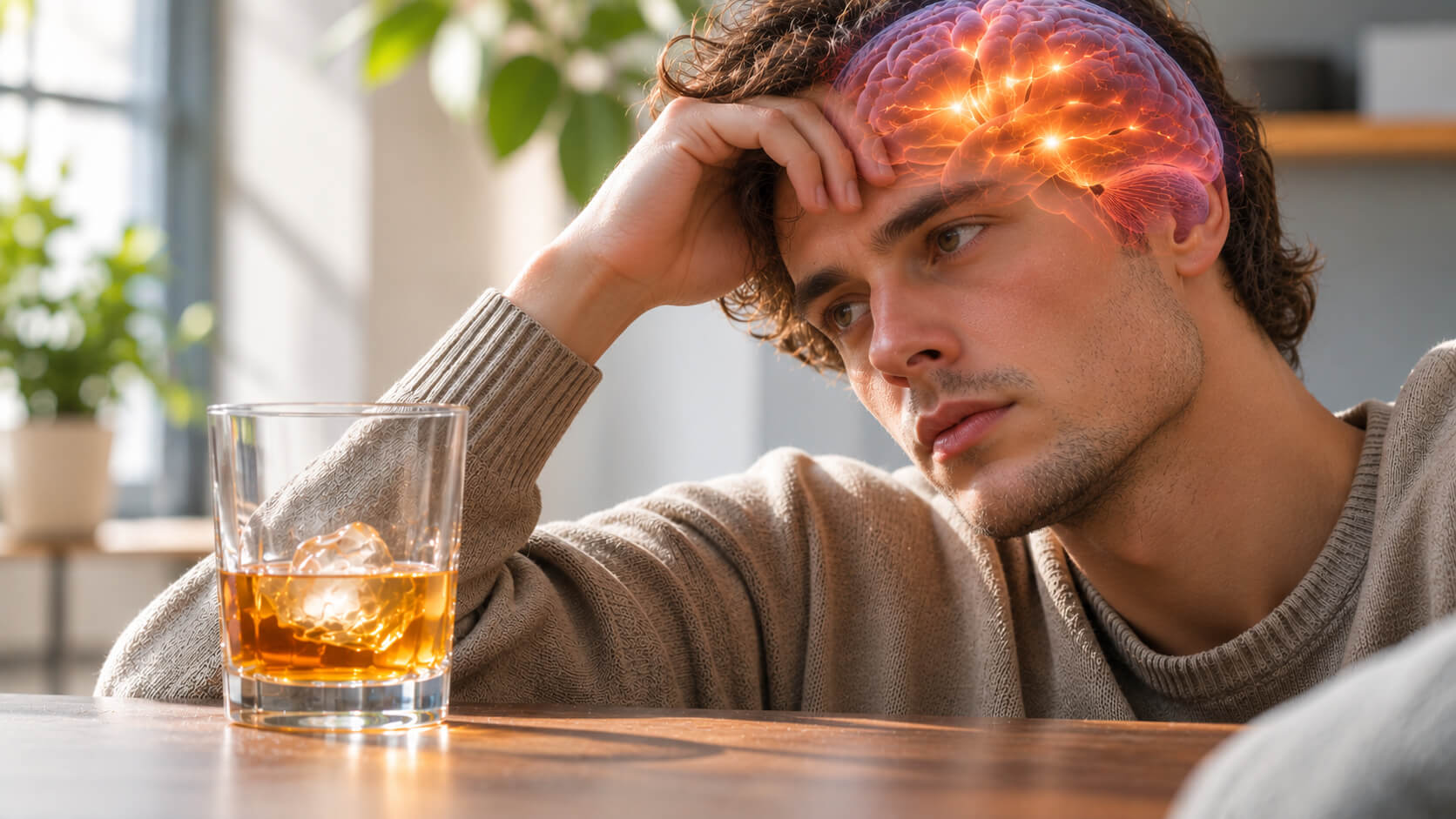
Alcohol is a central nervous system depressant. Although it may initially make someone feel more relaxed or sociable, it gradually interferes with the brain’s ability to control movement, judgment, attention, and behavior. After consumption, alcohol is absorbed through the stomach and, primarily, the small intestine before entering the bloodstream. Alcohol can begin affecting the brain within minutes of consumption as it enters the bloodstream and crosses the blood-brain barrier.
Alcohol affects the central nervous system by changing how several neurotransmitter systems function. Among its important actions are effects on GABA-A receptor signaling, which is involved in inhibitory activity, and glutamate signaling, which plays a major role in excitatory communication between neurons. Alcohol also influences other systems involved in reward, mood, attention, and behavior.
These changes help explain why alcohol can initially produce feelings of relaxation or reduced inhibition while simultaneously impairing judgment, reaction time, and coordination. As intoxication becomes more severe, a person may develop slurred speech, memory disturbances, marked drowsiness, and reduced consciousness. At dangerously high levels of intoxication, alcohol can interfere with protective airway reflexes and normal breathing.
Although alcohol and phenibut do not have identical pharmacological mechanisms, both can impair central nervous system function. Their overlapping effects are therefore an important concern when the substances are used together.
The effects depend on how much a person drinks, how quickly they drink it, and their individual response. Possible effects include [3]:
- slower reaction times and reduced coordination;
- poor judgment and increased impulsivity;
- slurred speech and difficulty walking steadily;
- impaired memory, including alcohol-related blackouts;
- nausea, vomiting, and dizziness;
- reduced consciousness and, in severe cases, dangerously slow breathing.
At dangerously high blood alcohol levels, alcohol can interfere with essential functions such as breathing, consciousness, and protective airway reflexes. Severe intoxication may cause repeated vomiting, an inability to wake up, irregular breathing, or loss of consciousness. These symptoms can indicate alcohol poisoning, a medical emergency that cannot be reliably reversed with coffee, cold showers, or sleep.
Alcohol-related mortality statistics also require careful interpretation. The CDC has documented deaths specifically attributable to alcohol poisoning in the United States, while the WHO estimates the broader global burden of deaths associated with alcohol consumption, including injuries, liver disease, cardiovascular conditions, and other causes [4][5]. These figures describe different outcomes and should not be directly compared.
Can You Mix Phenibut and Alcohol?
No, you should not mix phenibut and alcohol. Taking them at the same time may increase sedation, confusion, impaired coordination, and potentially dangerous breathing problems. The effects of this combination are difficult to predict because direct clinical evidence is limited. No scientifically established safe dose or waiting period exists, so combining these substances should be avoided [6].
Alcohol-related drug interactions are also a concern when using other psychoactive substances, including armodafinil and alcohol.
How Do Phenibut and Alcohol Interact?
Phenibut and alcohol affect the central nervous system through partly different but overlapping mechanisms. Phenibut acts primarily on GABA-B receptors and also interacts with certain voltage-gated calcium channels. Alcohol influences several neurotransmitter systems, including GABA-A and glutamate signaling. Although their pharmacological actions are not identical, both substances can reduce alertness, impair coordination, and interfere with normal brain function.
When taken together, these effects may overlap and increase the risk of excessive sedation, impaired judgment, memory problems, and loss of consciousness. A person may become less able to recognize their own level of impairment, making falls, accidents, and other dangerous situations more likely. Severe poisoning may also involve breathing difficulties, particularly when other sedating substances are present.
However, direct human studies examining the combined effects of phenibut and alcohol are limited. Established pharmacology provides reasons for concern, but it does not allow clinicians to predict the precise severity of the interaction in an individual. The response may vary with the amounts consumed, timing, underlying health conditions, individual sensitivity, and exposure to other medications or substances [7].
Online discussion boards complicate public awareness. People browsing Reddit threads often read conflicting personal experiences, ranging from users claiming they had a single beer without trouble to others waking up strapped to hospital beds with breathing tubes.
What Happens When You Combine Phenibut and Alcohol?
Combining phenibut and alcohol may result in greater sedation and impairment than a person expects from either substance alone. Possible effects include pronounced drowsiness, difficulty concentrating, slurred speech, dizziness, poor balance, and reduced reaction time. Some people may become unusually confused or struggle to remain awake. In severe cases, consciousness may be significantly impaired, and a person may be difficult to awaken.

These effects can make everyday activities hazardous. Walking without assistance may increase the risk of falls, while driving or operating machinery becomes particularly dangerous because judgment, coordination, and the ability to respond to unexpected situations may all be impaired. The severity and timing of symptoms cannot be reliably predicted for an individual.
Memory and behavior may also be affected when phenibut and alcohol are used together. Alcohol can interfere with the formation of new memories, sometimes causing partial or complete memory gaps during intoxication. A person experiencing an alcohol-related blackout may remain conscious, speak with others, or perform familiar activities but later be unable to recall some or all of what happened.
Phenibut can also cause confusion, sedation, and impaired cognitive functioning, particularly in cases of excessive use or poisoning. Combining these substances may increase overall impairment, although the frequency and severity of memory disturbances specifically caused by their interaction have not been established in controlled human studies.
Behavioral changes may include reduced inhibition, poor judgment, agitation, disorientation, or unusual reactions. These effects can make it harder for someone to recognize worsening intoxication, avoid dangerous situations, or seek medical assistance when needed. The response is unpredictable, particularly when other sedating medications or substances are involved.
Another concern is uncertainty about the composition and strength of phenibut products sold online. Products marketed as supplements or research chemicals may not undergo the same quality controls as approved medicines, and their labeling may not always provide a reliable basis for judging exposure. This can complicate medical assessment if someone becomes unwell after taking phenibut.
The risk of adverse effects may also be influenced by underlying medical conditions, kidney function, other medications, and whether additional sedating substances were consumed. Because these factors are difficult to evaluate without professional assessment, the absence of severe symptoms immediately after use should not be taken as proof that complications cannot develop later.
Possible Side Effects and Overdose Risks
Beyond poor coordination and memory gaps, pairing two central nervous system depressants introduces life-threatening medical dangers. The mild end of the range includes heavy drowsiness, dizziness, headache, nausea, and slurred speech. The serious end is far more worrying. Confusion can deepen into delirium, with hallucinations or wild agitation. Vomiting becomes hazardous when someone is too sleepy to protect the airway, because stomach contents can enter the lungs. Blood pressure and heart rate may drop, body temperature may fall, and seizures can occur.
One of the most serious potential complications is respiratory depression, meaning breathing that becomes slow and shallow or stops. Severe phenibut poisoning can involve profound sedation, coma, and breathing difficulties that may require intensive medical care. However, these complications do not occur in every exposure, and their frequency depends partly on the severity of poisoning and whether other substances were taken. Alcohol poisoning can cause the same problem. When both substances are present, the risk of severe impairment may increase, making prompt medical assessment important.
Clinical toxicology data show that phenibut poisoning can be serious even without alcohol. According to a CDC analysis of 1,320 phenibut exposure reports submitted to U.S. poison centers between 2009 and 2019, drowsiness or lethargy was reported in 29.0% of cases, confusion in 21.3%, and coma in 6.2%. Approximately 12.6% of reported exposures were classified as having major medical effects, and three deaths were recorded [10].
These figures describe reported phenibut exposures, including cases involving other substances. They do not establish the probability of a particular complication when phenibut is combined specifically with alcohol. Nevertheless, they demonstrate why reduced consciousness and other symptoms of severe intoxication should be treated as potentially dangerous rather than dismissed as ordinary sleepiness.
Potential warning signs include [8]:
- extreme drowsiness or an inability to stay awake;
- severe confusion or unusual behavior;
- repeated vomiting;
- slurred speech and an inability to stand or walk safely;
- loss of consciousness or difficulty waking the person;
- slow, shallow, irregular, or noisy breathing;
- seizures or blue, grey, or unusually pale lips and skin.
It’s advisable to call emergency services immediately if someone cannot be awakened, has a seizure, is struggling to breathe, or has slow or irregular breathing. Do not wait for every symptom to appear. If the person is unconscious but breathing normally, place them on their side if you can do so safely and follow the emergency operator’s instructions. This can help reduce the risk of choking on vomit. Do not give them food, drinks, coffee, or other substances.
How Long Do Phenibut and Alcohol Interactions Last?
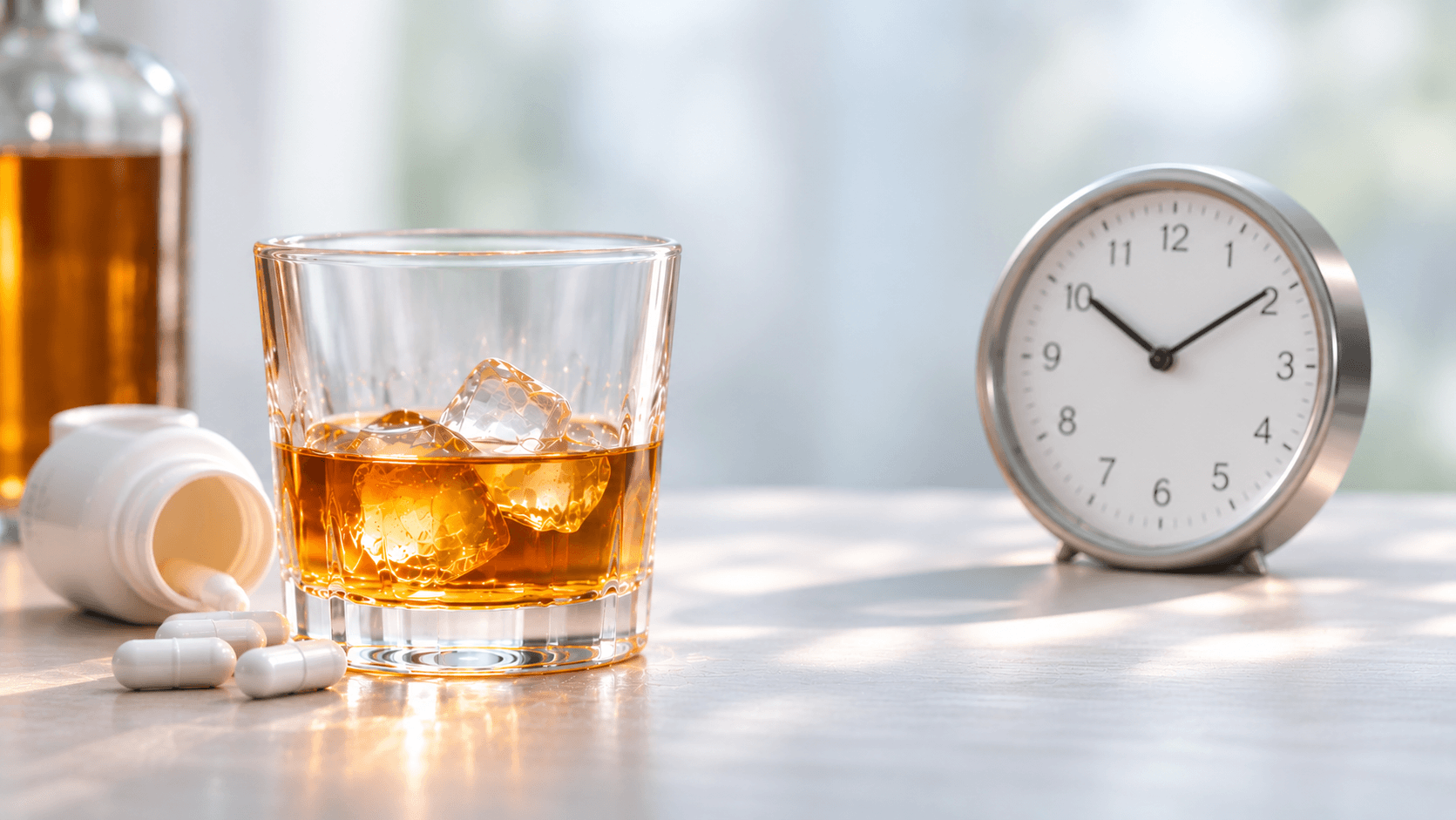
There is no reliable, scientifically established period after taking phenibut during which drinking alcohol becomes safe. No one can give a reliable number, as several things shape the answer: how much of each substance a person took, how close the doses were, body size, age, sex, and regular use or tolerance.
The timing of these substances matters because their effects do not necessarily begin, peak, or disappear at the same moment. Alcohol may continue to be absorbed after drinking stops, while phenibut can have a delayed onset and effects that persist for several hours. The duration of impairment may also differ from the time during which a person notices obvious symptoms.
As a result, someone may underestimate the overlap between the substances, especially if they initially feel little impairment or assume that the effects of an earlier dose have worn off. Lingering drowsiness, impaired concentration, and reduced coordination can remain relevant even when the person no longer feels strongly intoxicated. There is no scientifically established waiting period that guarantees safe use of alcohol after phenibut or vice versa.
The safest approach is to avoid the pairing altogether rather than attempting to calculate a personal waiting period.
What Should You Do If You Have Mixed Phenibut and Alcohol?
If you have already taken both substances, the next steps depend on how you feel and how much you may have consumed. Because the severity of the interaction risks is difficult to predict, it is important to take the situation seriously.
Even if the person initially feels well, contacting a poison control center or healthcare professional is advisable because symptoms may develop or worsen after a delay. In the United States, Poison Control provides free, confidential guidance at 1-800-222-1222. Outside the United States, contact the local poison information service or emergency medical provider.
When seeking help, be prepared to explain which substances were taken, the approximate amounts, when they were consumed, and whether any prescription medications or other drugs were involved. If available, keep the original phenibut packaging so healthcare professionals can review the listed ingredients and strength. Do not delay emergency assistance while trying to collect this information.
Call emergency services immediately if the person cannot be awakened, has difficulty breathing, experiences a seizure, or loses consciousness. A person with concerning symptoms should not be left alone or allowed to drive. If they are unconscious but breathing normally, follow the emergency operator’s instructions about positioning and monitoring them.
Do not consume additional alcohol, phenibut, or other substances that can cause sedation, such as opioids, sleeping pills, or certain antihistamines. Combining multiple central nervous system depressants can increase impairment and the risk of serious complications.
If you regularly take prescribed sedating medications or may be physically dependent on alcohol or phenibut, seek urgent medical advice before making abrupt changes to an established treatment regimen. Withdrawal from some substances can itself be medically dangerous. A poison control specialist or healthcare professional can help assess the situation and recommend appropriate next steps.
If someone has mixed phenibut and alcohol, a sober, responsible person should stay with them while medical advice is obtained. Do not assume that sleeping will resolve the problem, especially if the person is becoming increasingly drowsy or confused. Monitor for worsening symptoms, including difficulty staying awake, abnormal breathing, repeated vomiting, or loss of consciousness. If the person becomes difficult to awaken or develops breathing problems, call emergency services immediately rather than continuing to observe them at home.
Avoid common home remedies that do not reverse poisoning and may create additional risks:
- Do not rely on coffee or energy drinks: Caffeine may temporarily make someone feel more alert, but it does not reverse the underlying effects of phenibut or alcohol, restore normal coordination, or treat respiratory depression. It also does not reliably accelerate the elimination of these substances. A temporary feeling of wakefulness can be misleading and should never replace medical assessment.
- Avoid cold showers: Sudden cold water shock can lower body temperature further, or cause falls in a bathroom full of hard surfaces.
- Never force someone to vomit: Inducing vomiting in a drowsy person dramatically raises the chance of choking on stomach fluid.
- Do not drive: Arrange for a sober person to help you obtain medical advice or emergency care.
If a person who has mixed these substances becomes increasingly drowsy or begins vomiting, gently roll them onto their side in the standard recovery position, with the top knee bent forward for stability and head tilted slightly so any fluid drains safely out of the mouth rather than down the airway.
It’s worth noting that honesty matters in situations like this, as doctors can only treat what they know about. Tell responders exactly what was taken, the dose, and time. The first rule of safety is simple: when in doubt, get help.
Phenibut, Alcohol Dependence, and Withdrawal
Repeated use of phenibut or alcohol can lead to tolerance and physical dependence, although the mechanisms, patterns, and severity of these effects may differ. Tolerance develops when the same amount of a substance produces a reduced response over time. A person may then feel tempted to increase their intake to achieve the effects they previously experienced, which can raise the risk of intoxication and other complications.
Tolerance can also develop with other psychoactive medications, although the mechanisms of modafinil tolerance differ from those associated with phenibut.
With phenibut, tolerance and dependence may develop over a relatively short period in some individuals, particularly with frequent use. However, the speed and severity of these changes vary according to the amount consumed, frequency of use, duration of exposure, and individual factors. Physical dependence means that the body has adapted to repeated exposure, so reducing or stopping the substance may trigger withdrawal symptoms.
Dependence should not be confused with addiction, although the two can overlap. A person can develop physical dependence without necessarily meeting the criteria for a substance use disorder. Both situations deserve medical attention when withdrawal could be severe or difficult to manage safely.
Possible phenibut withdrawal symptoms include [9]:
- anxiety, agitation, and restlessness;
- insomnia and disturbed sleep;
- hand tremors, sweating, and a racing heartbeat;
- hallucinations, confusion, or psychosis;
- seizures in severe cases.
An important distinction is that phenibut intoxication and phenibut withdrawal can produce different, sometimes overlapping symptoms. Intoxication may involve marked drowsiness, impaired consciousness, and reduced breathing, while withdrawal more commonly involves heightened nervous system activity, such as severe anxiety, agitation, insomnia, tremors, and increased heart rate. Serious withdrawal cases may also involve hallucinations, delirium, or seizures.
This distinction matters because someone who appears confused or agitated may be experiencing intoxication, withdrawal, or complications involving additional substances. The symptoms alone may not be enough for a bystander to determine the cause. Medical assessment is particularly important when the person’s history of use is unclear or when alcohol dependence may also be present.
Both alcohol and phenibut withdrawal can require medical supervision after physical dependence has developed. A person should not attempt to manage potentially severe withdrawal by independently substituting one substance for the other.
The Verdict: Is Mixing Phenibut and Alcohol Safe?
No. Combining phenibut and alcohol is unsafe because both substances can impair central nervous system function. When taken together, their overlapping effects may increase the risk of severe drowsiness, confusion, impaired coordination, accidents, loss of consciousness, and potentially dangerous breathing problems.
Although the pharmacological actions of both substances are reasonably well understood, direct clinical research examining their combined effects remains limited. Scientists have not established a safe dose, a predictable level of impairment, or a waiting period that guarantees safety. Reports of phenibut poisoning and established knowledge of alcohol-related toxicity provide important reasons for caution, even though they do not allow the exact risk for an individual to be calculated.
To stay safe, never mix phenibut and alcohol. Avoid taking additional sedating substances, including sleeping pills, opioids, or other central nervous system depressants. If you have already taken both and feel unwell, call a doctor right away, and if symptoms are severe, treat it as a medical emergency. The safest choice is simple: do not experiment with this combination.
Frequently Asked Questions
Here are answers to some of the most frequently asked questions about mixing phenibut and alcohol.
Can you drink alcohol while taking phenibut?
No, drinking alcohol while taking phenibut is unsafe at any dose. Both substances depress the central nervous system, and combining them may increase the risk of impaired coordination, confusion, vomiting, loss of consciousness, and potentially dangerous breathing problems. The severity of these effects cannot be reliably predicted, even when the amount of alcohol consumed is small. There is no established safe amount of alcohol that can be used with phenibut.
Does phenibut increase the effects of alcohol?
Phenibut may increase alcohol-related sedation and impairment because both substances affect the central nervous system. However, the precise magnitude of their interaction has not been established in controlled human studies. Combining them may increase the risk of confusion, impaired coordination, loss of consciousness, and other serious complications. There is no reliable way to predict how much stronger the effects will be for a particular person.
Can phenibut and alcohol cause respiratory depression?
Yes, respiratory depression is a potential serious complication. Severe alcohol poisoning can interfere with normal breathing, and serious phenibut poisoning has been associated with reduced consciousness and breathing difficulties. Because both substances can impair central nervous system function, combining them raises concern about additional sedation and respiratory complications.
The exact risk for an individual has not been established in controlled human studies. However, slow, shallow, irregular, or noisy breathing, difficulty waking a person, and loss of consciousness are emergency warning signs. If any of these occur, call emergency services immediately. Do not wait for the person to recover through sleep.
How long should you wait between phenibut and alcohol?
There is no scientifically established waiting period that guarantees safety when using phenibut and alcohol. The duration of phenibut’s effects can vary depending on the amount taken, individual metabolism, kidney function, and other factors. Feeling sober does not necessarily mean that all impairment has resolved, especially when a substance has delayed or lingering effects. Avoid combining phenibut and alcohol rather than relying on a specific number of hours.
Can phenibut help with alcohol withdrawal?
Phenibut has been used medically in some countries, but strong clinical evidence supporting its safety and effectiveness as a treatment for alcohol withdrawal is limited. It is not an established first-line treatment for alcohol withdrawal in the United States.
Phenibut can also cause physical dependence and withdrawal, including severe anxiety, agitation, insomnia, hallucinations, and, in serious cases, seizures. Attempting to manage alcohol withdrawal independently with phenibut may create additional medical risks rather than resolve the underlying problem [9].
Alcohol withdrawal can be life-threatening, particularly for people with a history of heavy, prolonged drinking or previous withdrawal complications. Anyone at risk of severe withdrawal should seek medical assessment and follow a professionally supervised treatment plan instead of attempting self-treatment with phenibut.
References
- Phenibut. Retrieved: October 21, 2026. Wikipedia.org.
- Phenibut: A drug with one too many “buts.” By Bill J. Gurley and Igor Koturbash. Retrieved: October 21, 2026. Pubmed.ncbi.nlm.nih.gov.
- Neurological Effects of Alcohol: Impact of Alcohol on the Brain. Written by Stacy Mosel, L.M.S.W. Medically reviewed by Ryan Kelley, NREMT. Retrieved: October 21, 2026. Americanaddictioncenters.org.
- Alcohol Poisoning Deaths. Retrieved: October 21, 2026. Cdc.gov.
- Alcohol. Retrieved: October 21, 2026. Who.int.
- Phenibut Addiction in a Patient with Substance Use Disorder. By Kan Hong Zheng, Afra Khan, and Eduardo D Espiridion. Retrieved: October 21, 2026. Pmc.ncbi.nlm.nih.gov.
- Phenibut and Alcohol: Risks, Interactions, and Safer Use. By Mara Ellison. Retrieved: October 21, 2026. Ir.mountaintopuniversity.edu.ng.
- Mixing Phenibut and Alcohol: Can You Drink on Phenibut? Written by Zinnia Health Editorial Staff. Edited by Rebecca Hill. Retrieved: October 21, 2026. Zinniahealth.com.
- Phenibut – abuse, addiction & recovery. Written by Alexandra Talarico. Clinically reviewed by Ashley Gardner. Retrieved: October 21, 2026. Recoverycentersofamerica.com.
- Notes from the Field: Phenibut Exposures Reported to Poison Centers — United States, 2009–2019. By Janessa M. Graves, PhD1; Julia Dilley, PhD2; Sanjay Kubsad3; Erica Liebelt, MD. Cdc.gov.
Author Details

MBBS, MD - Psychiatry, Consultant Psychiatrist

MBBS, Doctor Of Medicine MD

Head Modafinil Researcher