
 (2 votes, average: 5.00 out of 5)
 Loading...
Ever wonder why some people thrive on one medication while others can’t tolerate it—even when treating the same condition? Strattera vs Adderall is a common dilemma for those managing attention-deficit/hyperactivity disorder (ADHD), exploring cognitive enhancement, or seeking alternatives that align with their lifestyle. Some people want immediate focus for studying or work, while others desire steady control without crashes, anxiety, or feeling high.

Is one safer? Which one is better than the other? Does it either give you energy or support weight loss? Are they even the same as far as how they work? This guide examines core facts of these two medications, from dosage and side effects to use cases such as studying, treating ADHD, or weight loss. The guide also reviews the core difference between the two meds to help you acquaint yourself before deciding what might be right for you.
What Is Strattera?
Strattera, with its active ingredient, atomoxetine, is a non-stimulant medication approved by the U.S. Food and Drug Administration (FDA) in 2002 for the treatment of ADHD in children (ages 6 and older), adolescents, and adults. It belongs to a class of medications known as selective norepinephrine reuptake inhibitors (NRIs) [1].
Unlike stimulant medications such as Adderall or Ritalin, Strattera does not rapidly or directly increase dopamine in the brain. Instead, it works by selectively inhibiting the presynaptic norepinephrine transporter—a protein responsible for reabsorbing norepinephrine—thereby increasing the availability of this key neurotransmitter in the brain.
Norepinephrine plays a critical role in regulating attention, alertness, and impulse control, which are often impaired in individuals with ADHD. Because Strattera modulates this system gradually, it typically takes 8 to 12 weeks to reach its full therapeutic effect—a key distinction from fast-acting stimulants, which produce noticeable changes within hours or days [2].
Strattera is not a stimulant and is not classified as a controlled substance, reflecting its minimal potential for abuse, dependence, or euphoria. It does not produce a “high” and will not give you energy in the way stimulants might. This makes it a particularly suitable option for patients who:
- cannot tolerate stimulant-related side effects;
- have a history of substance misuse or concerns about dependence;
- may benefit from a non-stimulant approach due to anxiety or stimulant sensitivity;
- require an alternative to stimulants when cardiovascular risk must be carefully considered.
Its pharmacological profile supports steady, all-day symptom control without the peaks, crashes, or rebound effects sometimes seen with stimulants. Once stabilized on treatment, many adults report meaningful improvements in sustained focus, emotional regulation, and reduced impulsivity.
Importantly, Strattera is usually prescribed as part of a comprehensive treatment plan that includes educational, psychological, and social interventions—aligning with best practices in ADHD management.
A generic version is now widely available, significantly reducing cost compared to many brand-name stimulants. However, note that Strattera has not been studied in children under 6 years of age, and its safety and efficacy in this population have not been established.
What Is Adderall?
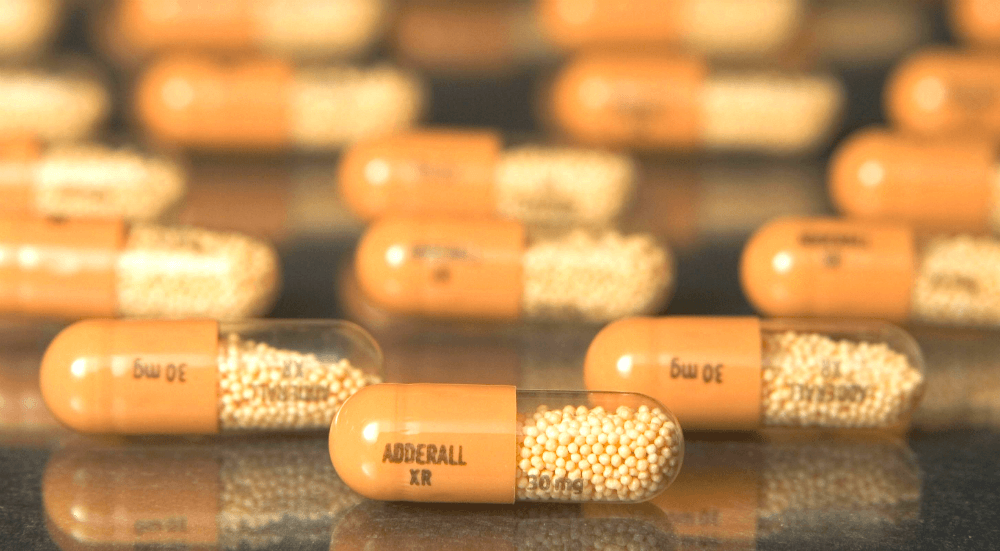
Adderall is a central nervous system (CNS) stimulant that affects chemicals in the brain and nerves that contribute to hyperactivity and impulse control. It’s composed of a combination of amphetamine and dextroamphetamine. It is FDA-approved for the treatment of ADHD and narcolepsy [3].
Adderall works by increasing the levels of two key neurotransmitters in the brain—dopamine and norepinephrine—which enhances activity in brain regions responsible for attention, motivation, focus, impulse control, and executive function. This neurochemical action often leads to a rapid onset of effects, with many individuals noticing improved alertness, wakefulness, mental clarity, and energy within an hour of taking the medication.
Due to its direct impact on dopamine pathways, Adderall can produce pronounced cognitive and behavioral effects, making it a potent option for managing ADHD symptoms. Its classification as a controlled substance reflects its potential for misuse and dependence when not used as prescribed.
Adderall is also available in generic forms, offering the same active ingredients and therapeutic effects at a lower cost. The availability of generics increases accessibility for many patients, helping reduce out-of-pocket expenses without sacrificing efficacy—assuming consistent manufacturing quality and proper medical supervision.
Strattera vs. Adderall: Difference Between…
Adderall is one of the most commonly prescribed stimulants in the U.S., while Strattera accounts for a smaller but growing share of non-stimulant ADHD prescriptions. While both aren’t similar but are used to treat ADHD, they are fundamentally different in how they work, how they’re dosed, how the body responds to them, and their potential for misuse. These differences significantly impact which medication might be more appropriate for a given individual—especially when considering long-term use, safety, and personal health history.
Dosages
Dosing for Strattera and Adderall reflects their distinct pharmacological profiles. It’s available in capsule dosage forms of 10 mg, 18 mg, 25 mg, 40 mg, 60 mg, and 100 mg. The FDA-approved starting dose for adults and children over 70 kg is 40 mg once daily, though some clinicians may begin at 25 mg to improve tolerability [4].
After a minimum of 3 days, the dose can be increased to the target maintenance range of 80–100 mg per day, administered either as a single dose in the morning or split into two doses (morning and late afternoon). Strattera has a half-life of ~5 hours (shorter in CYP2D6 extensive metabolizers), but active metabolites prolong the effect. This explains why once- or twice-daily dosing works.
The maximum recommended daily dose is 100 mg. For children and adolescents weighing less than 70 kg, dosing is weight-based. Starting at 0.5 mg/kg/day, increasing after at least 3 days to a target of 1.2 mg/kg/day, with a maximum of 1.4 mg/kg/day or 100 mg, whichever is less.
Strattera can be taken with or without food; however, taking it with food may reduce stomach upset. Because it is not a stimulant, there’s no need for precise timing, though consistent morning dosing helps maintain steady blood levels.
In contrast, Adderall comes in two formulations: immediate-release (IR) tablets and extended-release (XR) capsules. IR tablets are available in 5 mg, 7.5 mg, 10 mg, 12.5 mg, 15 mg, 20 mg, and 30 mg strengths. Adderall XR capsules are available in 5 mg, 10 mg, 15 mg, 20 mg, 25 mg, and 30 mg strengths [5].
For adults with ADHD, the typical starting dose is 5 mg once or twice daily (for IR) or 10 mg once daily (for XR). The dose may be increased by 5–10 mg at weekly intervals based on response and tolerability. The maximum recommended daily dose is 40 mg for IR (though higher doses are sometimes used off-label under strict supervision) and 30 mg for XR in most adult patients. Adderall XR utilizes a bead-based delivery system—50% immediate release, 50% delayed—mimicking two doses without requiring a midday pill.
In children (6 years and older), Adderall IR typically starts at 5 mg once or twice daily, with gradual increases as needed. Adderall should be taken in the morning to avoid insomnia; IR may be dosed two or three times a day, with the last dose no later than early afternoon. XR is taken once daily in the morning, and capsules should be swallowed whole—never crushed or chewed, as this can cause rapid release of the full dose and increase the risk of side effects or misuse.
While both medications are titrated based on individual response, Adderall’s effects are noticeable within hours, allowing for quicker dose adjustments. Strattera requires days to weeks to reach full effect, necessitating a more cautious and gradual approach. Neither has a universal “correct” dose—optimal dosing depends on factors like age, tolerance, weight, symptom severity, metabolism, and coexisting conditions.
Adderall often requires more frequent fine-tuning due to its peak-and-trough effect, whereas Strattera’s slower onset leads to a steadier, more consistent blood level over time. Furthermore, Adderall dose adjustments may occur weekly; Strattera adjustments typically occur every 1–2 weeks due to a slower onset.
Side Effects

The side effect profiles of Strattera and Adderall differ markedly due to their mechanisms of action. Strattera commonly causes gastrointestinal issues, including nausea, dry mouth, fatigue, and reduced appetite. It may also lead to mood-related concerns, including irritability or, notably, an increased risk of suicidal ideation in children and adolescents—so much so that it carries an FDA black box warning. While it can slightly raise heart rate or blood pressure, these cardiovascular effects are generally milder than those seen with stimulants.
A large review published in 2020 linked atomoxetine to reduced appetite, weight loss, and increases in blood pressure, suggesting it may be a less favorable option for some individuals when safety is a priority. Recent evaluations have raised concerns about its safety during pregnancy and breastfeeding. Due to limited evidence, experts have advised that discontinuing atomoxetine during pregnancy should be carefully considered on a case-by-case basis [6].
Adderall, being a potent CNS stimulant, frequently causes insomnia, anxiety, jitteriness, increased heart rate, and elevated blood pressure. Its strong appetite suppression often results in noticeable weight loss—a side effect some users seek but which can be problematic long-term. Many also experience a “crash” as the medication wears off, marked by mental fog, fatigue, or irritability. In children, prolonged Adderall use may interfere with normal growth patterns.
Overall, Strattera tends to be better tolerated by individuals with anxiety or a history of substance use. And Adderall—despite its higher effectiveness for many—poses greater risks in those populations.
Getting ‘High’
The potential for experiencing a “high” is one of the starkest contrasts between these two medications. Adderall, as a Schedule II controlled substance, has a high potential for abuse and dependence. When taken in higher-than-prescribed doses, the drug can trigger a surge of dopamine that produces euphoria, intense energy, and heightened confidence. This is precisely why it’s often misused by professionals seeking a cognitive edge or recreational stimulation.
In contrast, Strattera does not produce any euphoric effects, even at high doses. It works by selectively inhibiting norepinephrine reuptake without significantly affecting dopamine in the brain’s reward pathways, making it non-intoxicating and non-reinforcing. As a result, Strattera carries virtually no risk of recreational misuse and is considered much safer for individuals with a personal or family history of substance use disorders.
While some may choose Adderall, hoping it will give them energy beyond therapeutic benefit, Strattera provides only gradual, non-euphoric symptom control—making it a more stable but less “stimulating” option.
To help clarify how these two ADHD medications differ in practice, here’s a side-by-side comparison of their key clinical and practical features:
| Feature | Strattera | Adderall |
| Drug Class | Selective NRI | CNS Stimulant |
| Approved Uses | ADHD (ages 6+) | ADHD (ages 3+), narcolepsy |
| Onset of Effect | gradual: 1–2 weeks for initial improvement; full effect in 4–12 weeks | rapid: 30–60 minutes (IR); 1–2 hours (XR) |
| Duration of Action | ~24 hours (steady coverage) | IR: 4–6 hours; XR: 10–12 hours |
| Abuse Potential | none | high |
| Potential to Cause a “High” | no euphoria, even at high doses | yes, especially when misused or taken in excess |
| Weight Loss | mild or none; occasional appetite reduction | common; significant appetite suppression and weight loss |
| Dosing Frequency | once or twice daily (morning ± afternoon) | IR: 2–3 times/day; XR: once daily (morning) |
| Common Side Effects | nausea, fatigue, dry mouth, mood changes | insomnia, anxiety, jitteriness, increased heart rate, “crash.” |
| Special Warnings | black box warning for suicidal ideation in children/teens [1] | not for use in patients with heart disease, hyperthyroidism, or glaucoma |
| Metabolism | primarily by the CYP2D6 liver enzyme (poor metabolizers may need lower doses) | metabolized by the liver and kidneys; excreted in urine |
| Generic Available? | yes | yes |
While this table highlights the core distinctions between Strattera and Adderall, the right choice depends on more than just pharmacology. Individual factors—such as medical history, lifestyle, symptom severity, and personal response—play a crucial role in determining which medication offers the best balance of effectiveness, tolerability, and safety.
Comparing Strattera & Adderall for 3 Common Uses
Both drugs are primarily prescribed for ADHD, but they’re often evaluated—or even sought—for other reasons, including weight management and academic performance. Which drug will give you energy, or which is good for weight loss? How they stack up in these real-world scenarios reveals important differences in effectiveness, safety, and intended use.
ADHD Treatment
Adderall is widely regarded as more effective for ADHD due to its direct impact on dopamine and norepinephrine, offering rapid symptom relief—often within the first dose. Strattera, while effective for many, typically takes weeks to reach full benefit and shows a more modest response rate. However, Strattera provides consistent 24-hour coverage without the peaks and crashes associated with stimulants, which can be especially valuable for adults managing mood stability or those with comorbid anxiety.
Because it’s non-addictive and not a controlled substance, Strattera is often preferred for patients with a history of substance use or those who need long-term, steady management—making it a valid alternative even if it’s not as strong or fast-acting as Adderall.
Across a large body of controlled trials in both children and adults with ADHD, Adderall consistently showed stronger symptom reduction than atomoxetine at around 12 weeks. In clinician-rated outcomes, amphetamines produced larger improvements in core ADHD symptoms in both children/adolescents and adults, while atomoxetine also improved symptoms but to a more moderate degree.
In adults, both Adderall and Strattera were clearly more effective than placebo, but amphetamines ranked higher in overall effectiveness when compared directly. However, this greater efficacy came with a trade-off: amphetamines were associated with poorer tolerability, showing higher rates of side effects and treatment discontinuation than placebo in both age groups [7].
Weight Loss

Neither medication is approved for weight loss, but appetite suppression is a common side effect—especially with Adderall. Many users report noticeable weight loss due to reduced hunger and increased metabolism, which is why Adderall is sometimes used off-label for body image or dieting purposes. Strattera may also decrease appetite, but this effect is generally milder and less consistent.
Some individuals may experience weight loss as a negative effect of taking Strattera. In a study, children who took Strattera for up to 9 weeks lost an average of 0.5 kg. Another study revealed that women identified as obese who administered Strattera for 12 weeks lost 3.6 kg on average [8].
Importantly, using either drug solely for weight loss is unsafe and medically discouraged. Adderall’s potential for misuse in this context is particularly concerning, given its stimulant properties and abuse risk. If weight management is a goal, neither Strattera nor Adderall should be considered a “good” or sustainable solution.
Healthier, targeted alternatives, such as FDA-approved weight-loss medications (e.g., semaglutide or liraglutide), structured nutrition plans, behavioral therapy, and regular physical activity, offer safer and more effective long-term strategies without the cardiovascular or psychological risks linked with stimulant or off-label medication use.
For Studying
When it comes to studying, Adderall is frequently associated with enhanced concentration, mental stamina, and alertness—effects that have made it popular among students. It can give you energy and help sustain focus during long study sessions, which is why some perceive it as a superior drug for studying. However, this comes with trade-offs: anxiety, sleep disruption, and dependency risks.
Strattera, by contrast, doesn’t offer on-demand cognitive enhancement. It works gradually to improve baseline attention over weeks, supporting consistent study habits rather than acute performance spikes. Strattera offers significant cognitive benefits in patients with ADHD, particularly in areas of executive function, attention, and working memory [9]. The med can help with emotional lability and self-regulation, contributing to an overall improved quality of life and better social functioning [10].
While someone already on Strattera may find it helpful during exams, it won’t replicate the immediate “boost” of Adderall—and it certainly won’t produce a “high.” When used appropriately under medical supervision, both can support learning—but their roles are fundamentally different: Adderall acts as a fast-acting performance aid, Strattera is a steady foundational tool.
Strattera vs Adderall – Which One to Choose?
Deciding between Strattera and Adderall isn’t about which is universally “better”—it’s about which aligns with your biology, lifestyle, and health goals. If you need rapid symptom relief, are comfortable with a stimulant, and don’t have contraindications like heart issues or anxiety, Adderall may offer stronger, faster results—especially for ADHD or short-term cognitive demands like exams. Cost is another factor: generic Adderall is often less expensive than brand-name Strattera, though generic atomoxetine is increasingly available.
For most people, Adderall is more effective overall; however, if you prioritize a lower risk of dependence, have a history of substance use, experience anxiety, or want consistent 24/7 coverage without peaks and crashes, Strattera could be the safer, more sustainable option.
Regardless, neither is the same as the other, and one isn’t simply an alternative “instead” of the other—they serve different purposes. Consulting a healthcare provider to evaluate your medical history, expectations, and treatment goals is essential before making a conversion or starting either medication.
References
- Atomoxetine. Retrieved: December 26, 2025. Wikipedia.org.
- How long does it take for Strattera to work? Medically reviewed by Kristianne Hannemann. Retrieved: December 26, 2025. Drugs.com.
- Adderall. Retrieved: December 26, 2025. Wikipedia.org.
- Highlights of Prescribing Information (pdf). Retrieved: December 26, 2025. Accessdata.fda.gov.
- Adderall dosage. By Patricia Weiser. Published: September 16, 2024. Medically reviewed by Rosanna Sutherby. Medicalnewstoday.com.
- Safety of 80 antidepressants, antipsychotics, anti‐attention‐deficit/hyperactivity medications and mood stabilizers in children and adolescents with psychiatric disorders: a large scale systematic meta‐review of 78 adverse effects. By Marco Solmi, Michele Fornaro, Edoardo G. Ostinelli, et al. Published: May 2020. Pmc.ncbi.nlm.nih.gov.
- Comparative efficacy and tolerability of medications for attention-deficit hyperactivity disorder in children, adolescents, and adults: a systematic review and network meta-analysis. By Samuele Cortese, Nicoletta Adamo, Cinzia Del Giovane, et al. Published: September 2018. Thelancet.com.
- Does Strattera cause weight loss? Medically reviewed by Kristianne Hannemann. Retrieved: December 26, 2025. Drugs.com.
- Effect of atomoxetine on executive function impairments in adults with ADHD. By Thomas E. Brown, James Holdnack, Keith Saylor, et al. Published: December 21, 2009. Pubmed.ncbi.nlm.nih.gov.
- The effects of atomoxetine on emotional control in adults with ADHD: An integrated analysis of multicenter studies. By P. Asherson, S. Stes, M. Nilsson Markhed, et al. Published: April 15, 2020. Cambridge.org.
Author Details

MBBS, MD - Psychiatry, Consultant Psychiatrist

MBBS, Doctor Of Medicine MD

Head Modafinil Researcher