
 (3 votes, average: 5.00 out of 5)
 Loading...
When treating complex mental health conditions, can one medication truly address every symptom? This is often the case for individuals prescribed Zoloft for mood disorders, but still struggling with symptoms like fatigue, brain fog, or low motivation. Can modafinil, the world’s first safe “smart drug” that promotes wakefulness and cognitive function, help fill this gap? How does modafinil interact with Zoloft, and is their combination safe? What are the potential benefits, and what risks should patients be aware of before using both drugs together?

This guide explores whether modafinil and Zoloft can be used together, the differences between these two medications, and how they may affect the body when combined. It discusses the expected benefits, possible side effects, and necessary precautions when combining these drugs. Further, the guide covers withdrawal symptoms if either medication is discontinued. Let’s dive in.
Basics About Modafinil
Modafinil is a prescription medication primarily used to promote wakefulness in individuals experiencing excessive daytime sleepiness [1]. Unlike traditional stimulants such as amphetamines, modafinil works through more selective neurochemical pathways, making it less likely to produce intense euphoria or dependency.
It is approved for medical use in conditions like narcolepsy, shift work sleep disorder, and obstructive sleep apnea; however, it is also commonly prescribed off-label for attention-deficit/hyperactivity disorder (ADHD), jet lag, Alzheimer’s and Parkinson’s diseases, multiple sclerosis, fatigue associated with depression, and other neurological conditions.
From a pharmacological standpoint, modafinil influences several neurotransmitters involved in attention, alertness, and executive function. It inhibits dopamine reuptake, increasing dopamine availability in the brain. It also affects norepinephrine, histamine, serotonin, and orexin systems—all of which play critical roles in maintaining wakefulness and cognitive performance.
Modafinil improves various brain functions, including working & episodic memory, fluid intelligence, motivation, mental acuity, learning skills, executive function, planning, and decision-making ability; heightens focus, mental clarity, and task persistence; and sustains attention. These benefits have made it a subject of interest in psychiatry, particularly for patients experiencing residual symptoms of depression, such as low motivation and mental fatigue [2][3][4].
Overall, modafinil is a functional cognitive enhancer rather than a mood stabilizer. This distinction becomes especially important when evaluating how it may interact with antidepressants like Zoloft.
Main Info About Zoloft
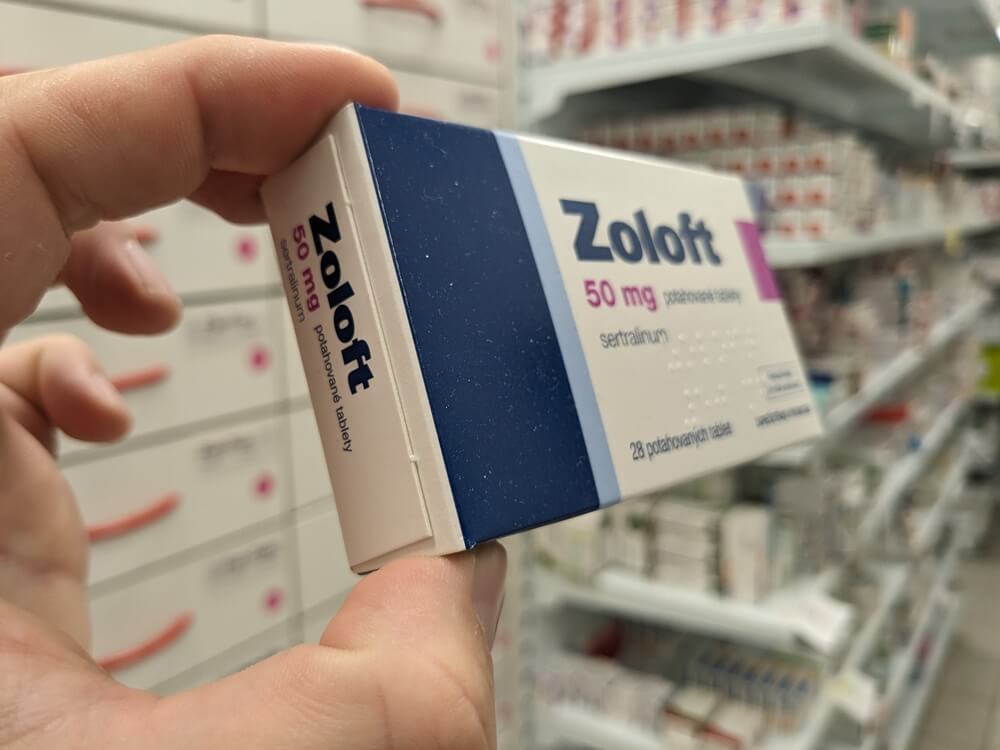
Zoloft, known generically as sertraline, is a widely prescribed antidepressant belonging to the selective serotonin reuptake inhibitor (SSRI) class. It’s primarily used to treat mood and anxiety disorders by helping regulate serotonin, a neurotransmitter essential for emotional balance. It doesn’t significantly affect acetylcholine, histamine, GABA, or benzodiazepine receptors.
Zoloft is approved for conditions such as major depressive disorder, panic disorder, social anxiety disorder, post-traumatic stress disorder, obsessive-compulsive disorder, and premenstrual dysphoric disorder. The medication works by blocking the reabsorption (reuptake) of serotonin in the brain. This allows more serotonin to remain active between nerve cells, improving communication within mood-regulating circuits. Over time, this can lead to improved emotional stability, reduced anxiety, and better stress tolerance [5].
Unlike modafinil, Zoloft does not act quickly. Patients may need several weeks before noticing meaningful improvements. SSRIs like sertraline significantly reduce depressive symptoms when taken consistently over time.
Zoloft may help individuals experience improved mood, reduced panic episodes, less intrusive thoughts, and better emotional resilience. While Zoloft is effective at stabilizing mood, some patients may experience persistent low energy or cognitive sluggishness. This is one reason clinicians sometimes explore adjunct therapies—including medications like modafinil—to target symptoms that SSRIs alone may not fully resolve.
Key Differences Between Modafinil and Zoloft
Modafinil and Zoloft are often discussed together because they may be prescribed to support individuals facing both emotional and cognitive challenges. However, these two medications are fundamentally different—not only in their purpose but also in how they function within the brain.
Modafinil is primarily a wakefulness-promoting agent. Zoloft, on the other hand, is an antidepressant. While both influence brain chemistry, they operate in entirely different systems—one targeting energy and cognition, the other emotional balance. Below is a detailed comparison to better understand their differences:
| Feature | Modafinil | Zoloft |
| Initial Approval and uses | approved by the FDA in 1998 under the brand name Provigil for sleep disorders:
For off-label use, it can be prescribed for depression, ADHD, fatigue, chronic fatigue syndrome, and drowsiness. For healthy individuals, it’s used for cognitive enhancement and productivity, among other purposes |
approved in 1991 under the brand name Zoloft for major depressive disorder treatment, mood and anxiety disorders, PTSD, OCD, panic disorder, and social anxiety disorders, as well as premenstrual dysphoric disorder and certain anxiety-related symptoms. It may improve concentration and cognitive function once the mood stabilizes |
| Drug Class | wakefulness-promoting agent (eugeroic) and a CNS stimulant | SSRI |
| Main Neurotransmitters Affected | dopamine, histamine, serotonin, and orexin | serotonin |
| Dosage Forms | oral tablet | oral tablet and oral concentrate |
| Speed of Effect | fast—noticeable within 2-3 hours | gradual—may take weeks |
| Impact on Energy | increases mental stamina and alertness | may improve energy indirectly over time |
| Impact on Mood | neutral to mildly uplifting | direct mood stabilization |
| Common Side Effects | headache, anxiety, insomnia, nausea | fatigue, nausea, sleep disturbance, emotional blunting |
| Dependence Risk | low, but present due to stimulant-like action | very low |
| Generic Availability | yes (modafinil) | yes (sertraline) |
| Half-Life | ~12–15 hours | 66 hours |
| Controlled Substance Status | Schedule IV (low abuse potential) | not a controlled substance |
| Drug Interactions | interact with 538 drugs [6] | can interact with 678 drugs [6] |
| Alcohol/Food/Lifestyle Interactions | modafinil may interact with alcohol and food, potentially increasing side effects such as dizziness, insomnia, and anxiety. Alcohol can amplify modafinil’s stimulating effects, leading to increased jitteriness or restlessness. Grapefruit and grapefruit juice can also affect modafinil’s metabolism, potentially increasing its side effects. Limit alcohol and grapefruit intake while on modafinil, and consult your doctor before making dietary changes. | Zoloft with alcohol can increase dizziness, drowsiness, and confusion and impair coordination. Grapefruit juice may elevate medication levels, leading to more side effects. Avoid alcohol, follow prescribed dosages, and avoid tasks requiring alertness. Always inform your doctor about the medications you are using and never stop treatment without consulting them. |
As seen from the table, modafinil focuses on function—helping the brain stay awake, alert, and productive. Zoloft focuses on emotion—helping the brain regulate mood and stress responses. For example, someone taking Zoloft may feel emotionally better but still struggle with low motivation, mental fatigue, and difficulty concentrating. In such cases, modafinil may help bridge the gap between emotional recovery and cognitive performance.
On the other hand, modafinil alone would not address persistent sadness, anxiety, and panic symptoms. This is because it does not stabilize serotonin pathways.
These complementary roles explain why clinicians sometimes consider using both medications—not because they do the same thing, but because they address different dimensions of mental health.
Still, their differences also mean the combination should be approached carefully, since altering multiple neurotransmitter systems at once may affect sleep, anxiety levels, and nervous system balance.
Can You Take Modafinil and Zoloft Together?

In some cases, doctors prescribe modafinil alongside Zoloft to manage depression that includes persistent fatigue or cognitive slowing. These medications act on different neurotransmitter systems and do not directly interfere with each other. However, combining them may influence overall brain chemistry and requires medical supervision to balance benefits and potential stimulation-related risks. Let’s address what to expect if mixing:
Safety of This Combination
Combining modafinil with Zoloft can be safe under medical supervision, particularly for individuals whose depressive symptoms improve with Zoloft but who continue to experience fatigue, low energy, or cognitive issues.
As a result, modafinil may influence how Zoloft is processed in the body, potentially altering its effectiveness or side effect profile. However, no significant interaction has been found, though individual variations may occur [7]. Healthcare providers may monitor this carefully when combining the two medications. Modafinil can mildly raise heart rate and interact with CNS stimulants, potentially exacerbating psychiatric symptoms like anxiety, depression, or psychosis.
It may also disrupt sleep patterns and alter Zoloft metabolism, affecting its effectiveness or side effects. Modafinil is metabolized in the liver through the same enzyme pathways as Zoloft (CYP450). Both medications require careful monitoring, especially for individuals with pre-existing cardiovascular conditions or a history of seizures. Zoloft can increase the risk of suicidal thoughts and has interactions with alcohol and grapefruit juice that may heighten side effects.
Always consult a healthcare provider before combining these drugs and ensure proper monitoring of sleep, blood pressure, mood, and overall health during treatment. Disease interactions with modafinil and Zoloft include hypertension, psychiatric disorders, cardiovascular issues, liver dysfunction, substance abuse, depression, hyponatremia, glaucoma, mania, platelet dysfunction, seizure disorders, syndrome of inappropriate secretion of antidiuretic hormone (SIADH), renal dysfunction, and weight loss [6]. Careful monitoring is needed in patients with these conditions to ensure safe use of both medications.
Potential Benefits of Combining the Medications
When prescribed appropriately, combining modafinil with Zoloft can enhance both emotional and cognitive aspects of depression recovery. While Zoloft is effective at improving mood, it may not fully address mental fatigue, brain fog, or low motivation. Modafinil can help with cognitive enhancement and improving overall functioning.
Here are the potential benefits of combining modafinil with Zoloft:
- reduction of antidepressant-related fatigue: SSRIs like Zoloft can cause sedation or emotional flattening. Modafinil’s wakefulness-promoting effects counteract these side effects, making patients feel more alert and energetic throughout the day;
- enhanced cognitive performance: Modafinil improves cognitive functions, such as focus and task persistence, which helps patients resume daily activities and cognitive tasks hindered by depressive symptoms;
- increased motivation and task initiation: Depression recovery often involves rebuilding the ability to engage in activities. Modafinil supports task completion, boosting productivity and goal-directed behavior;
- improved daytime functioning: With enhanced wakefulness and cognitive clarity, individuals may experience better work performance, social participation, and emotional resilience.
A study of 348 adults with major depressive disorder found that adding modafinil to SSRI therapy significantly improved wakefulness, fatigue, and overall condition within one week [8]. Similarly, a meta-analysis involving 910 patients showed significant improvements in depression scores and fatigue reduction [9]. Besides, adding modafinil to SSRI treatment significantly reduces fatigue and excessive sleepiness in patients with major depressive disorder, with about 70% reporting meaningful improvement in overall condition, including mood [10].
Possible Adverse Effects

While the combination offers benefits, it can also increase the likelihood of certain side effects. Why? This is due to the simultaneous influence on multiple neurotransmitter systems. Some individuals may experience overstimulation or nervous system imbalance, particularly during early treatment phases. Potential adverse effects of the Modafinil–Zoloft combination include:
- increased anxiety;
- restlessness;
- insomnia;
- headaches;
- elevated heart rate;
- mild blood pressure changes;
- gastrointestinal discomfort;
- irritability;
- sweating;
- difficulty relaxing.
Other side effects can occur [11]. Because both meds affect CNS signaling, their interaction may amplify stimulation-related symptoms. Rare but more serious reactions may include:
- agitation;
- racing thoughts;
- palpitations;
- emotional instability.
Although modafinil does not significantly increase serotonin, its indirect influence on neurotransmission may enhance SSRI sensitivity in some individuals. Careful monitoring is important when combining agents affecting dopamine and serotonin pathways.
Sleep disruption is one of the most commonly reported concerns, especially when modafinil is taken too late in the day. Patients with underlying anxiety disorders may be more prone to experiencing nervous system overstimulation.
Withdrawal Timeline
Can you take both medications together long-term without facing withdrawal issues? Indeed, discontinuing either medication should be done gradually and under medical guidance to avoid unnecessary discomfort. Dependence and withdrawal can occur, particularly with misuse or prolonged use. Symptoms can vary in intensity based on dosage and duration of use.
Stopping sertraline may lead to discontinuation symptoms due to serotonin adjustments in the brain. Possible symptoms include:
- mood swings;
- irritability;
- dizziness;
- sleep disturbances;
- emotional sensitivity.
Symptoms may begin within 1–5 days after dose reduction and typically resolve within 1–3 weeks. Gradual tapering helps reduce intensity.
Modafinil withdrawal tends to be milder but may still affect daily functioning for a short period of time after stopping. Possible symptoms include:
- fatigue;
- reduced motivation;
- low mood;
- brain fog;
- increased sleepiness.
Onset may occur within 24–48 hours and generally resolves within several days to one week. When both medications are stopped simultaneously, individuals may temporarily experience low energy, mood dips, and reduced productivity. This reflects the removal of mood regulation and cognitive stimulation support.
The Verdict: Combining Modafinil and Zoloft
In summary, combining modafinil with Zoloft can offer significant benefits for patients who experience both emotional and functional symptoms of depression. While SSRI therapy is effective in improving mood, it often leaves residual issues like fatigue, cognitive slowing, and low motivation. Modafinil, with its wakefulness-promoting and cognitive-enhancing properties, can help address these persistent symptoms, improving overall functioning and quality of life.
However, the safety of this combination depends on careful medical supervision. Close monitoring is essential to ensure that any potential risks, such as overstimulation, cardiovascular effects, or sleep disruptions, are properly managed. Gradual introduction and individualized treatment plans are key to achieving optimal outcomes.
Modafinil is used as an adjunct to SSRI therapy, particularly in patients struggling with excessive sleepiness and fatigue despite mood improvement. When prescribed appropriately and monitored regularly, this mix is effective in the recovery process, enhancing emotional well-being and cognitive function.
References
- Modafinil. Retrieved: March 1, 2026. Wikipedia.org.
- Practical Use and Risk of Modafinil, a Novel Waking Drug. By Dongsoo Kim. Published: February 22, 2012. Pmc.ncbi.nlm.nih.gov.
- The off-prescription use of modafinil: An online survey of perceived risks and benefits. By Rachel D. Teodorini, Nicola Rycroft, and James H. Smith-Spark. Published: February 5, 2020. Journals.plos.org.
- How Many Silicon Valley Startup Executives Are Hopped Up On Provigil? By Michael Arrington. Published: July 15, 2008. Techcrunch.com.
- Sertraline. Retrieved: March 1, 2026. Wikipedia.org.
- Comparing Modafinil vs Sertraline. Retrieved: March 1, 2026. Drugs.com.
- Can You Take Modafinil with Zoloft? Retrieved: March 1, 2026. Drugs.com.
- Modafinil augmentation of selective serotonin reuptake inhibitor therapy in MDD partial responders with persistent fatigue and sleepiness. By Maurizio Fava, Michael E. Thase, Charles DeBattista, et al. Published: July 2007. Pubmed.ncbi.nlm.nih.gov.
- Modafinil augmentation therapy in unipolar and bipolar depression: a systematic review and meta-analysis of randomized controlled trials. By Alexander J. Goss, Muzaffer Kaser, Sergi G. Costafreda, et al. Published: November 2013. Pubmed.ncbi.nlm.nih.gov.
- Modafinil augmentation of SSRI therapy in patients with major depressive disorder and excessive sleepiness and fatigue: a 12-week, open-label, extension study. By Michael E. Thase, Maurizio Fava, Charles DeBattista, Sanjay Arora, and Rod J Hughes. Published: February 2006. Pubmed.ncbi.nlm.nih.gov.
- Modafinil (Provigil) – Uses, Side Effects, and More. By Beth Johnston. Medically reviewed by Dana Manning. Retrieved: March 1, 2026. Webmd.com.
Author Details

MBBS, MD - Psychiatry, Consultant Psychiatrist

MBBS, Doctor Of Medicine MD

Head Modafinil Researcher