
 (3 votes, average: 5.00 out of 5)
 Loading...
“Nuvigil vs Provigil: Which should I take?” is one of the most searched comparisons among people who struggle with excessive daytime sleepiness. Doctors often prescribe them to help manage excessive daytime sleepiness caused by narcolepsy and other sleep disorders. Depending on individual needs and treatment goals, there’s a “better” option to choose.

This guide covers everything you should know before choosing between the two, from dosing and side effects to cost, where to buy the pills, and their affordability.
What Is Provigil?
Provigil is the brand-name version of a medication called modafinil. It was first approved by the FDA back in 1998 and belongs to a class of drugs known as wakefulness-promoting agents.
Unlike classic stimulants that can make users feel wired or jittery, Provigil works in a gentler way. Rather than flooding the brain with dopamine, it modulates the levels of several neurotransmitters that improve alertness, attention, and wakefulness. This unique mechanism of action helps people stay awake and alert without the sudden energy crashes typically associated with stronger stimulants.
Doctors prescribe Provigil to treat 3 major sleep disorders: shift work sleep disorder (SWSD), narcolepsy, and obstructive sleep apnea (OSA). Because it is a controlled substance (Schedule IV), Provigil requires a prescription. However, many healthy individuals use it off-label to achieve weight loss or to enhance their cognitive abilities, increase performance, and ultimately boost productivity [1][2].
Today, both branded Provigil and generic modafinil products are available. However, because generic versions contain the same active ingredient at a significantly lower cost, they have become the preferred choice for most buyers worldwide.
What Is Nuvigil?
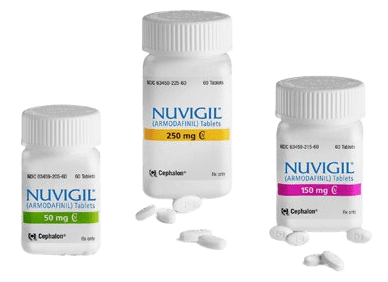
Nuvigil is the brand name for armodafinil. It was approved by the FDA in 2007 and is closely related to Provigil. In fact, armodafinil is the longer-lasting part (the R-enantiomer) of the modafinil molecule found in Provigil. This small chemical difference means Nuvigil is designed to provide steadier effects that can last throughout the day for many users. In fact, it is about 1.33 times as strong as racemic modafinil, meaning that a 150 mg dose often provides effects similar to a 200 mg dose of modafinil.
Like Provigil, Nuvigil is also used to promote wakefulness. It works on similar brain pathways to help reduce excessive sleepiness. It carries the same FDA approvals for narcolepsy, OSA, and SWSD [3][4]. People who take it often say it feels smoother and more consistent compared to some other options. Nuvigil is also classified as a controlled substance, so it needs a doctor’s prescription.
Many healthy students, entrepreneurs, shift workers, and other professionals also take Nuvigil off-label for cognitive enhancement. While generic versions can easily be obtained from online pharmacies and certain walk-in stores, it remains advisable to consult a healthcare professional before taking it or any medication.
Compare Nuvigil vs. Provigil
At first glance, Provigil and Nuvigil appear almost identical. Both medications are prescribed to promote wakefulness, both are commonly used to manage excessive sleepiness during the day, and both have earned strong reputations within the nootropics community for cognitive enhancement. However, they have several important differences that can influence their effectiveness, duration of action, and overall user preference.
The most significant distinction is the active ingredient. Provigil contains modafinil, while Nuvigil contains armodafinil. Because armodafinil consists only of the longer-lasting portion of the modafinil molecule, many users find that Nuvigil remains effective for a longer period during the day.
Another key factor in this comparison is duration. While both medications can provide wakefulness for many hours, Nuvigil is often perceived as having a stronger late-day effect. Provigil, on the other hand, may feel slightly gentler and more balanced for some users.
Cost can also influence purchasing decisions. Generic versions of both medications are widely available, although generic modafinil is generally easier to find and may have a lower overall cost depending on the supplier.
The table below shows the major similarities and differences between the two medications:
| Feature | Provigil | Nuvigil |
| Generic name | modafinil | armodafinil |
| Drug type | wakefulness-promoting agent | wakefulness-promoting agent |
| Approved uses | narcolepsy, SWSD, sleep apnea-related sleepiness | narcolepsy, SWSD, sleep apnea-related sleepiness |
| Duration of action | long-lasting | typically longer-lasting |
| Available strengths | 100 mg, 200 mg | 50 mg, 150 mg, 200 mg, 250 mg |
| Overall price range | often lower | often slightly higher |
| Popularity among nootropic users | very high | very high |
One question that frequently appears in user forums is Provigil and Nuvigil vs Adderall. Although all three drugs can increase alertness and focus, Adderall is a traditional stimulant that works very differently from modafinil and armodafinil. Provigil and Nuvigil are generally considered less stimulating and are often associated with a lower risk of producing the intense highs and crashes sometimes reported with amphetamine-based medications. To put this in perspective, modafinil is considered so safe that researchers at Harvard and Oxford Universities deemed it the world’s first safe “smart drug” [5].
Dosing Differences
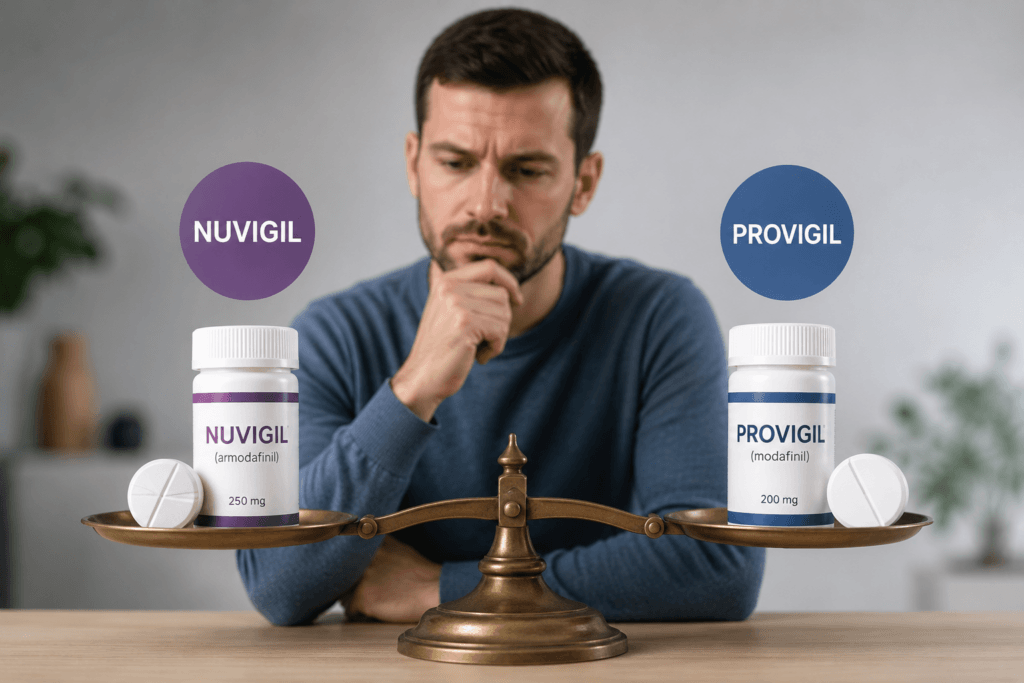
One of the clearest differences between Nuvigil and Provigil is how they are dosed. Although both medications are taken once daily in the morning (or 1 hour before a work shift for shift work disorder), the recommended amounts are not the same.
Provigil (modafinil) is typically prescribed at 200 mg per day. Some doctors start patients at 100 mg and increase from there, but 200 mg is the standard dose for most approved conditions. Going above 200 mg hasn’t been shown to provide additional benefits in clinical studies, though some physicians may prescribe up to 400 mg in rare cases.
Nuvigil (armodafinil), on the other hand, comes in a wider range of tablet strengths: 50 mg, 150 mg, 200 mg, and 250 mg. The usual recommended dosing is 150 mg per day for narcolepsy and OSA. For SWSD, the standard dose is also 150 mg taken roughly 1 hour before the shift begins. As earlier mentioned, because armodafinil is the more potent R-enantiomer of modafinil, a lower milligram dose can produce effects comparable to a higher dose of Provigil. Here’s a quick breakdown:
| Factor | Provigil (modafinil) | Nuvigil (armodafinil) |
| Standard dose | 200 mg/day | 150 mg/day |
| Available strengths | 100 mg, 200 mg | 50 mg, 150 mg, 200 mg, 250 mg |
| Maximum dose | 400 mg/day | 250 mg/day |
| Timing | once daily (morning) | once daily (morning) |
Both drugs should be swallowed whole with a substantial amount of water and can be taken with or without food. However, it’s worth noting that taking them with a heavy, high-fat meal may slightly delay their onset of action. If you’re using either medication for ADHD off-label, doctors typically prescribe the lowest effective dose and adjust based on response. It’s advisable to consult a medical practitioner before starting either medication.
What Are the Side Effects?

Modafinil and armodafinil are considered safe, especially compared with other available alternatives. However, like all medications, they have potential downsides. The good news is that most reported reactions are mild to moderate and tend to improve as the body acclimates to the medication.
The most commonly reported side effects include:
- nausea;
- dizziness;
- headache;
- diarrhea;
- insomnia;
- anxiety or nervousness;
- dry mouth.
Some users in online reviews have noted that Nuvigil tends to cause slightly more headaches and nausea compared to Provigil, while Provigil may be more likely to cause mild stomach upset. However, it’s worth noting that the experiences may vary widely from user to user [6].
One side effect that often comes up in discussions is weight loss. Both modafinil and armodafinil have been associated with appetite suppression. Some users report losing a few pounds while on either drug, not because the medications are designed for weight management, but because they simply feel less hungry. This isn’t a guaranteed effect, and neither drug is approved for weight-related purposes.
On rare occasions, particularly when abused or misused, Provigil and Nuvigil use may result in more serious adverse effects. This includes skin rash, palpitations, hallucinations, agitation, or signs of allergic reactions. While these events are very uncommon, they can worsen if left unattended. It is therefore advisable to stop taking the medication and see a doctor immediately if any adverse effects occur.
Nuvigil vs. Provigil Interactions

Although Provigil and Nuvigil are generally considered safe when used as directed, both medications can interact with other substances. Both share similar interaction profiles, which makes sense given their close chemical relationship. Taking note of these interactions is important, as they can affect effectiveness, increase side effects, or alter how other medications work in the body.
Some of the medications that may interact with both drugs include:
- hormonal contraceptives;
- blood thinners (e.g., warfarin);
- CYP3A4 substrates;
- antibiotics;
- other stimulants and caffeine.
Modafinil and armodafinil also interact with alcohol. Taking alcohol with, or shortly before or after, popping the pills could increase the risk of side effects. Some have even reported experiencing blackouts. It’s important for anyone considering Provigil or Nuvigil use to avoid the above-listed substances and consult a qualified healthcare provider.
Are These Nootropics Addictive?
One of the most common questions surrounding Provigil and Nuvigil is whether they can lead to addiction. The short answer: the addiction potential for both Nuvigil and Provigil is considered low, but it’s not zero.
Both medications are controlled in the United States. This means the government recognizes that they do carry some potential for misuse and dependence, though significantly less than Schedule II drugs like Adderall or Ritalin.
Clinical research shows that modafinil and armodafinil produce mild dopamine increases, enough to promote wakefulness and focus, but generally not enough to create the euphoric “rush” associated with highly addictive stimulants. Most users do not develop physical dependence when taking these medications as prescribed. However, it’s worth noting that some people may develop psychological dependence, particularly if they start relying on the medication to maintain productivity, stay awake for extended periods, or manage demanding schedules.
Being unable to function without a daily dose or feeling a need to increase your dosage without medical approval are warning signs of psychological dependence and are worth discussing with a healthcare provider.
Where to Buy Generic Provigil or Nuvigil Without Rx?
The cost of brand-name Provigil and Nuvigil can be surprisingly high, sometimes exceeding $30–$50 per pill without insurance in the United States. This steep price drives many people to seek generic alternatives such as Modalert, Modvigil, Waklert, and Artvigil online.
Generic modafinil and armodafinil are available from several international manufacturers and are legally sold in many countries. In the U.S., modafinil and armodafinil are prescription-only medications, so buying them without a prescription falls into a legal gray area. While importing small quantities for personal use is often tolerated, it’s technically not FDA-approved, and regulations vary by country. This is why it’s always important to check your local laws before placing an order.
That said, several reputable online pharmacies have built strong reputations for selling genuine generic versions at a fraction of the brand-name cost, and for shipping to most parts of the world without requiring a prescription. Below is a summary of some recommended vendors:
| Pharmacy | Main Focus | Payment Methods | Average Price/Pill | Delivery Time | Reputation |
| ModafinilUSA.com | Fast US-focused shipping | Zelle, PayPal, eCheck, Credit/Debit Cards (Visa, Mastercard, AmEx), Cryptocurrency | ~$0.99-$3.99 | 7–18 days via standard shipping and 3-4 business days or overnight for domestic deliveries | highly rated |
| ModafinilXL.com | Global nootropics vendor | Bitcoin, Visa, Mastercard, AmEx, Zelle, PayPal, Bill Pay, eCheck | ~$0.99-$3.99 | 7–12 days via standard shipping on average, and 3-4 business days or overnight for domestic deliveries | thousands of verified positive user reviews |
| BuyModafinilOnline.com | Generic wakefulness medications + ED medications | Bitcoin, Visa, Mastercard, AmEx, PayPal, Zelle, eCheck | ~$1.09-$3.99 | 7–18 days via standard shipping, and 3-4 business days or overnight for domestic deliveries | trusted |
| BuyGenerics.com | Broad generic medication catalog | Bitcoin, Visa, Mastercard, AmEx, Zelle, PayPal, eCheck, Bill Pay | ~$0.99-$3.99 | 7–18 days via standard shipping, and 3-4 business days or overnight for domestic deliveries | reliable |
| ModafinilCat.com | Global nootropics vendor | Bitcoin, Visa, Mastercard, AmEx, Zelle, PayPal, eCheck | ~$1.59-$3.99 | 7–12 days via standard shipping, and 3-4 business days or overnight for domestic deliveries | long operating history |
Most of these pharmacies offer popular generic brands manufactured by renowned pharmaceutical companies like Sun Pharma, HAB Pharma, and INTAS Pharma. Many also offer incentives such as free shipping, money-back guarantees, and free sample pills. For anyone interested in generic alternatives to Provigil and Nuvigil without a prescription, online pharmacies listed in the table above can offer these medications at competitive prices with international delivery options. However, it remains important to consult a professional healthcare provider before starting any medication.
Nuvigil vs. Provigil: Which Option Is Better?
There is no universal winner in the Nuvigil vs. Provigil debate because the better option ultimately depends on individual needs and preferences.
For users who want a medication with a long history of use, widespread availability, and often lower pricing, Provigil (modafinil) remains an excellent choice. It has helped countless people manage excessive daytime sleepiness and has become one of the most widely recognized wakefulness-promoting medications worldwide. Nuvigil (armodafinil), on the other hand, may appeal to those seeking stronger, longer-lasting effects throughout the day. Its effects tend to feel more sustained, which some users prefer for consistent wakefulness without redosing.
In the end, the best approach is to check individual goals, discuss options with a healthcare professional, and consider factors such as tolerability, availability, and overall value. Both Provigil and Nuvigil have earned their place among the most respected wakefulness-promoting medications available today. Whichever you choose, start at the lowest effective dose, monitor how your body responds, and never combine them with other stimulants without medical supervision.
References
- Modafinil. Retrieved: May 31, 2026. Wikipedia.org.
- Exploring the Potential of Modafinil for Weight Management. Retrieved: May 31, 2026. Dentappeal.com.
- Armodafinil. Retrieved: May 31, 2026. Wikipedia.org.
- Armodafinil versus Modafinil in Patients of Excessive Sleepiness Associated with Shift Work Sleep Disorder: A Randomized Double Blind Multicentric Clinical Trial. By D V Tembe, A Dhavale, et al. Retrieved: May 31, 2026. Pmc.ncbi.nlm.nih.gov.
- Narcolepsy medication modafinil is world’s first safe ‘smart drug’. By Helen Thomson. Retrieved: May 31, 2026. Theguardian.com.
- Nuvigil vs Provigil Comparison. Retrieved: May 31, 2026. Drugs.com.
Author Details

MBBS, MD - Psychiatry, Consultant Psychiatrist

MBBS, Doctor Of Medicine MD

Head Modafinil Researcher